
The Link Between Sleep Apnea, Cortisol, and Weight Gain

Medical Disclaimer: The information provided in this article is for educational purposes only and should not replace professional medical diagnosis, evaluation, or treatment. All treatments at Hemlock Clinic are prescribed based on individualized clinical assessment.
People with sleep apnea are constantly told that if they just lose weight, their breathing problems will go away. This common advice ignores a harsh medical reality: untreated sleep apnea actually breaks your metabolism, making it almost impossible to lose weight on your own.
We know your struggle with the scale is not a lack of willpower; it is a physical trap caused by how your body handles stress and lack of oxygen. As a leading medical clinic in the Greater Seattle area, Hemlock Clinic focuses on repairing the hormonal damage caused by poor sleep first, so sustainable weight loss can finally happen.
How Untreated Sleep Apnea Sabotages Your Metabolism
Your body needs deep, unbroken sleep to keep your internal engine running smoothly. When sleep apnea causes your airway to repeatedly collapse throughout the night, it shatters that deep sleep cycle.
Your brain views these sudden drops in oxygen as a nightly emergency. To keep you alive during this perceived danger, your nervous system actively slows down your metabolism to save energy. This is why sleep apnea often leads to stubborn, unexplainable weight gain.
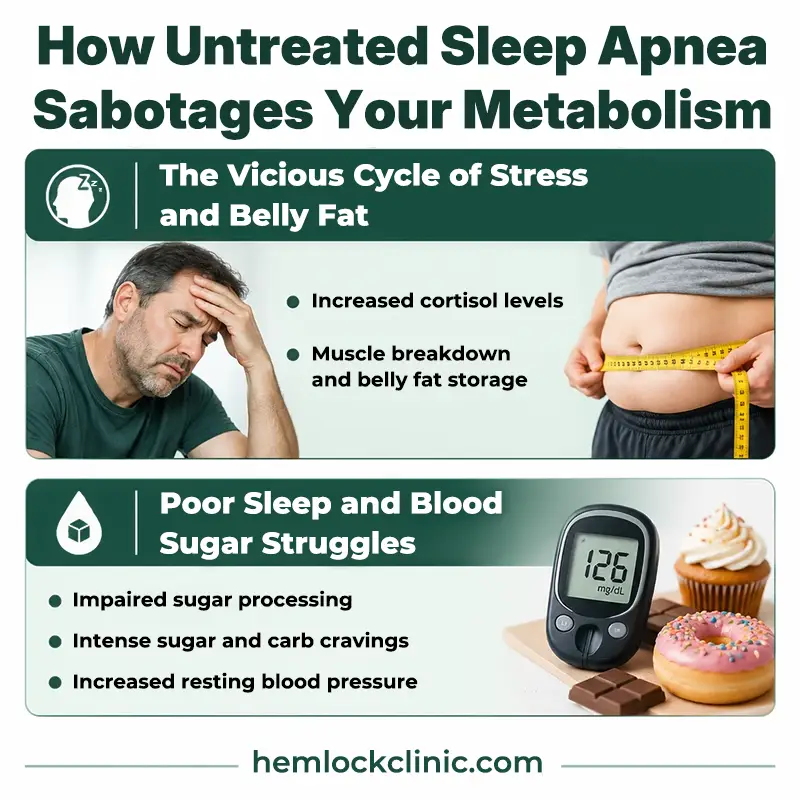
The Vicious Cycle of Stress and Belly Fat
When you stop breathing in your sleep, your brain triggers an acute stress response. It releases high levels of cortisol (the primary stress hormone) to force your airway back open and wake you up just enough to breathe.
“According to clinical guidelines from the American Academy of Sleep Medicine (AASM), repetitive breathing interruptions during sleep trigger constant ‘fight-or-flight’ stress in the nervous system, leading to ongoing metabolic slowdown.”
— American Academy of Sleep Medicine (AASM)
This ongoing nighttime stress forces your body to hold onto weight. The lingering stress hormone actively breaks down your muscle tissue while forcing your body to store fat directly around your belly.
Poor Sleep and Blood Sugar Struggles
Just a few nights of broken sleep make it much harder for your cells to process sugar properly. The next day, your brain signals an urgent need for quick energy, driving intense sugar and carb cravings.
Furthermore, this nightly oxygen shortage puts massive stress on your heart and raises your resting blood pressure. Because these risks compound quickly, we look at the big picture of your health, seamlessly tying in specialized high blood pressure treatment alongside our weight and metabolism programs.
How Sleep Apnea Messes With Your Hormones
To understand why standard diets fail when you have sleep apnea, it helps to look at how nightly oxygen drops throw your chemical signals completely out of balance:
| Metabolic Hormone | What It Normally Does | What Sleep Apnea Does to It | The Resulting Weight Problem |
| Cortisol (Stress) | Manages daily energy and stress responses. | Rises sharply at night to force your airway open. | Muscle loss and stubborn belly fat storage. |
| Insulin (Sugar Control) | Moves sugar out of your blood and into your cells for energy. | Low oxygen causes your cells to block insulin. | High blood sugar and intense, uncontrollable sugar cravings. |
| Ghrelin (Hunger) | Tells your brain when it’s time to eat. | Stays abnormally high because your body is exhausted. | A powerful, non-stop physical drive to overeat. |
| Leptin (Fullness) | Tells your brain when you’ve eaten enough. | Drops significantly, turning off your natural “I’m full” signal. | Never feeling truly satisfied after a meal. |
Breaking the Cycle with Medical Weight Management

Commercial diets fail sleep apnea patients because they completely ignore the biological road-blocks caused by chronic sleep deprivation. You cannot out-diet a nervous system that is trapped in constant nighttime panic.
Fixing this requires a targeted medical approach that deals directly with the root hormone problems.
Comprehensive Blood Testing
Real weight management starts with precise lab work, not calorie-counting apps. We run detailed blood panels to check your fasting insulin, stress hormone levels, and thyroid function.
This ensures we map out the exact damage sleep apnea has caused before starting any treatment.
Why Standard Diets Fail Sleep Apnea Patients
| The Standard Diet Approach | The Hemlock Clinic Approach |
| Assumes your metabolism is working normally. | Understands your metabolism is stuck in “survival mode” from sleep trauma. |
| Ignores nighttime physical stress responses. | Tests for high nighttime stress hormones and treats them directly. |
| Relies entirely on cutting calories. | Focuses on fixing how your cells handle sugar and insulin. |
Targeted Medical Weight Programs
Dr. Manpreet Sran uses prescription medications and close medical supervision to help your metabolism heal. For example, a 48-year-old male recently came to our clinic dealing with extreme daytime fatigue and steady weight gain, even though he followed a strict low-calorie diet. When we reviewed his lab work alongside his sleep apnea, we found severe insulin resistance driven by years of sleep deprivation.
Instead of telling him to eat even less, Dr. Sran prescribed a targeted GLP-1 medication and custom nutrition plan to bypass his hormonal blockades. Within four months, his blood markers normalized, and he safely lost 25 pounds of dangerous visceral fat.
These treatments are part of a complete care plan designed to restore your overall health. Our medical weight loss programs give you the clinical support needed to lose fat safely while your sleep issues are being managed.
Stop Fighting Your Biology and Get Real Help
The physical exhaustion of poor sleep and a broken metabolism cannot be fixed with another restrictive meal plan. Breaking this cycle requires advanced medical care.
Step off the dieting roller coaster and get comprehensive support from a team that understands your body. We provide welcoming, expert care and are currently accepting new patients for metabolic consultations in Redmond, WA.
Frequently Asked Questions About Sleep Apnea and Metabolism
Will using a CPAP machine automatically make me lose weight?
Not necessarily. While a CPAP machine successfully stops the nighttime oxygen drops and keeps your airway open, it doesn’t automatically reverse the insulin resistance or belly fat you’ve already built up. Medical weight management is often needed right alongside your CPAP therapy to repair the lingering hormone damage.
Can untreated sleep apnea lead to fatty liver disease?
Yes. The repeated drops in oxygen caused by sleep apnea promote liver inflammation and worsen insulin resistance. This combination is a major cause of Non-Alcoholic Fatty Liver Disease (NAFLD), which makes losing weight on your own even harder.
Looking for Personalized Primary Care?
Schedule a visit with Hemlock Clinic in Redmond to discuss your health concerns and the next appropriate step in your care.
Schedule Your VisitDr. Manpreet Sran, MD
Board Certified Internal Medicine PhysicianMedically reviewed on November 14, 2026.
View Provider Profile →
