
GLP-1 for Weight Loss: What to Know Before Starting Treatment

Medical Disclaimer: The information provided in this article is for educational purposes only and should not replace professional medical diagnosis, evaluation, or treatment. All treatments at Hemlock Clinic are prescribed based on individualized clinical assessment.
GLP-1 medications (like semaglutide) are highly effective tools for weight loss because they directly target the brain’s appetite centers and slow down digestion. However, they are not a quick cosmetic fix; they are powerful metabolic prescriptions. Using them safely requires close medical monitoring to prevent severe muscle loss, manage gastrointestinal side effects, and ensure your body maintains its baseline health once the medication stops.
At Hemlock Clinic, our position is simple: safety and sustainable health come before speed. As a physician-led primary care practice in Redmond, we treat GLP-1 therapy as a careful clinical program, rather than a simple product purchase.
How GLP-1 Medications Actually Work
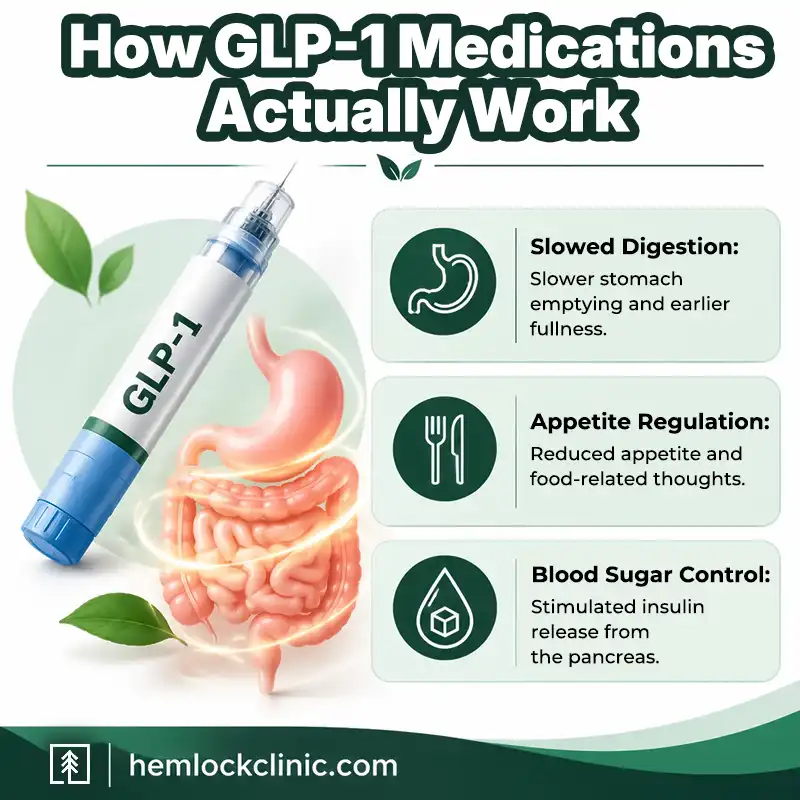
GLP-1 stands for glucagon-like peptide-1, a natural hormone your body releases after eating a meal. GLP-1 medications simply mimic this hormone in your system to produce three specific biological effects:
- Slowed Digestion: The medication slows how quickly your stomach empties food. This means food stays with you longer, and the physical sensation of fullness arrives much sooner.
- Appetite Regulation: The medication crosses into the brain and actively targets appetite centers. This is why many patients describe a sudden quieting of constant “food noise” or thoughts about eating.
- Blood Sugar Control: GLP-1 agonists stimulate the pancreas to release insulin properly, which is why these drugs were originally developed for diabetes care and why monitoring your blood sugar matters during treatment.
Why Reducing Appetite Is Only Half the Job
When your appetite drops significantly, your calorie intake drops with it. While this is the intended effect, it creates a medical risk that patients rarely hear about from online pharmacies: rapid weight loss often includes losing lean muscle tissue alongside body fat.
Your muscle tissue is the main engine that drives your resting metabolism. Losing muscle makes weight much easier to regain later and can leave you feeling physically weak.
“According to clinical guidelines from the Obesity Medicine Association (OMA), preserving lean body mass during anti-obesity medication therapy is critical. Without adequate protein intake and clinical monitoring, drug-induced weight loss can lead to sarcopenia (muscle loss), negatively altering a patient’s long-term metabolic rate.” — Obesity Medicine Association (OMA)
This is exactly why we treat preserving your muscle as a core medical goal, not an afterthought.
The Risks of Buying GLP-1 Medications Online
Unregulated online purchasing removes every safety layer that makes this medication workable. There is no lab review, no custom dosing plan, and no doctor to call when side effects escalate. Patients who inject themselves without clinical guidance often end up dehydrated, malnourished, or losing muscle at a dangerous rate.
Clinical Care vs. Online Prescriptions
| Feature | Unregulated Online Telehealth | The Hemlock Clinic Protocol |
| Initial Assessment | Fills a prescription based on a basic online form. | Requires comprehensive blood work (thyroid, insulin, cholesterol). |
| Dose Adjustments | Automatically increases the dose on a fixed monthly calendar. | Adjusts the dose slowly based entirely on your physical tolerance. |
| Health Monitoring | Focuses strictly on scale weight. | Monitors lean muscle mass, blood pressure, and overall organ function. |
Managing Side Effects With Step-by-Step Dosing
The most commonly reported side effects of medications like semaglutide are related to the stomach. Nausea is the most common, followed by changes in bowel habits (constipation or diarrhea) and temporary fatigue immediately following a dose increase.
Reading a list of side effects is not the same as having a medical plan to manage them. This is where supervised care separates a manageable experience from a miserable one. We use a process called clinical titration—meaning we start at a very low dose and only increase it when your body has fully adjusted.
For example, a 45-year-old patient recently transferred her care to Hemlock Clinic after purchasing a GLP-1 online. The online platform automatically doubled her dose in month two, causing severe nausea that prevented her from eating solid food or drinking water. We immediately paused her treatment to resolve her dehydration, ran proper metabolic labs, and restarted her at a micro-dose. By increasing her dose at her body’s specific pace—not a calendar’s—she was able to comfortably prioritize protein and achieve a 20-pound fat reduction without further illness.
Practical Steps to Reduce Discomfort
During your medical weight loss program, we guide you through specific habits to keep you comfortable:
- Eat smaller portions more often instead of attempting large meals.
- Prioritize protein at every meal to protect your muscle tissue.
- Drink water steadily throughout the day rather than chugging large amounts at once.
- Limit high-fat and fried foods, especially during the days right after a dose increase, when nausea is most likely.
Why We Require a Metabolic Baseline
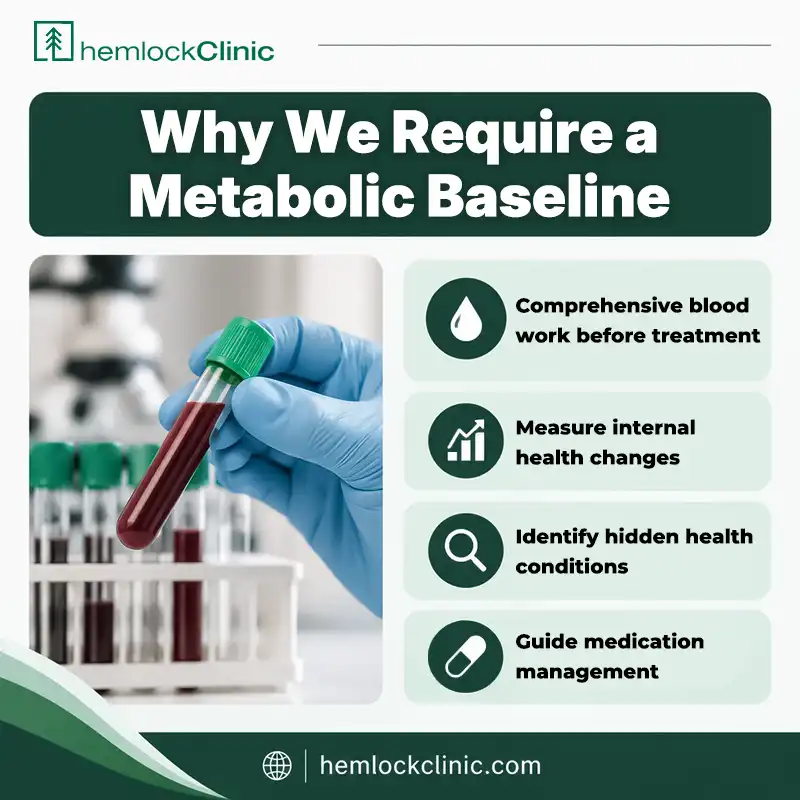
Prescribing a metabolic medication without lab work is guesswork. Before starting any treatment, Dr. Sran reviews your comprehensive blood work.
This establishes a firm baseline so we can measure real, internal health changes rather than just reacting to the bathroom scale. It also brings hidden conditions to light—such as untreated thyroid disease, prediabetes, or high blood pressure—that determine exactly how your medication should be managed.
What Starting Treatment at Hemlock Clinic Looks Like
A local, clinical relationship is the mechanism that keeps this treatment safe and effective. We keep our process clear and structured:
- Consultation: We review your medical history, current medications, and past weight loss efforts.
- Lab Work: We run and interpret baseline metabolic blood tests in-house.
- Custom Dosing Schedule: You receive a personalized plan for slowly increasing your dose and managing any side effects at each step.
- Ongoing Care: We schedule routine monitoring visits (in-person or telehealth) to review your progress, check your muscle health, and adjust the plan as needed.
Step off the dieting roller coaster and secure the definitive clinical support your body requires. We are currently accepting new patients and provide welcoming, expert care in Redmond, WA.
Frequently Asked Questions About GLP-1 Therapy
How quickly do GLP-1 medications start working?
The quieting of “food noise” and appetite changes often happen before you see a visible change on the scale. What matters more than speed is the pace your doctor sets. Moving too fast to chase scale results usually causes severe nausea that makes healthy eating impossible. We adjust your medication based on how your body tolerates it, not on a rushed schedule.
Are the stomach side effects temporary?
Nausea and changes in digestion are most often tied to the very start of treatment or right after a dose increase. For most patients, these ease significantly as the body adjusts. If you have persistent symptoms, it simply means your dose needs to be lowered or your eating habits need adjustment, which is exactly why routine monitoring visits are part of our program.
What happens if I stop taking the medication?
Because GLP-1 medications are a treatment, not a cure, your natural appetite signals will return once the medication leaves your system. This is why the habits built during treatment are so critical. Eating enough protein, participating in strength training, and understanding your metabolic triggers are what carry your results forward. We plan any medication discontinuation with you in advance so you are fully prepared for the transition.
Looking for Personalized Primary Care?
Schedule a visit with Hemlock Clinic in Redmond to discuss your health concerns and the next appropriate step in your care.
Schedule Your VisitDr. Manpreet Sran, MD
Board Certified Internal Medicine PhysicianMedically reviewed on November 22, 2026.
View Provider Profile →
