
Managing Eczema Flare-Ups During the Winter: A Clinical Approach
Medical Disclaimer: The information provided in this article is for educational purposes only and should not replace professional medical diagnosis, evaluation, or treatment. All treatments at Hemlock Clinic are prescribed based on individualized clinical assessment.
If you are spending the winter months constantly applying thick barrier creams only to deal with painful cracking and persistent itching, standard skincare advice is often insufficient. Winter eczema is not just a simple case of dry skin; it is a structural failure of your skin’s protective barrier combined with a localized immune flare-up. At Hemlock Clinic, located right here in the Greater Seattle area, our approach is rooted in real medical solutions. We focus on medically repairing your skin’s damaged architecture rather than just covering up the symptoms with over-the-counter petroleum jelly.
Why Ordinary Lotions Fail During Winter Flares
- Surface Hydration vs. Real Repair: Pharmacy lotions only trap surface moisture for an hour or two. Prescription treatments, on the other hand, actively rebuild the skin’s core protective layers.
- Masking vs. Stopping Inflammation: Basic anti-itch creams only hide the discomfort. Targeted medical treatments quickly halt the underlying immune overreaction causing the flare.
- Missing Infections: Standard moisturizers cannot stop bacteria from entering open cracks, which is why a doctor’s evaluation is needed to check for common infections like Staph.
Why Winter Eczema Is More Than Just Seasonal Dry Skin
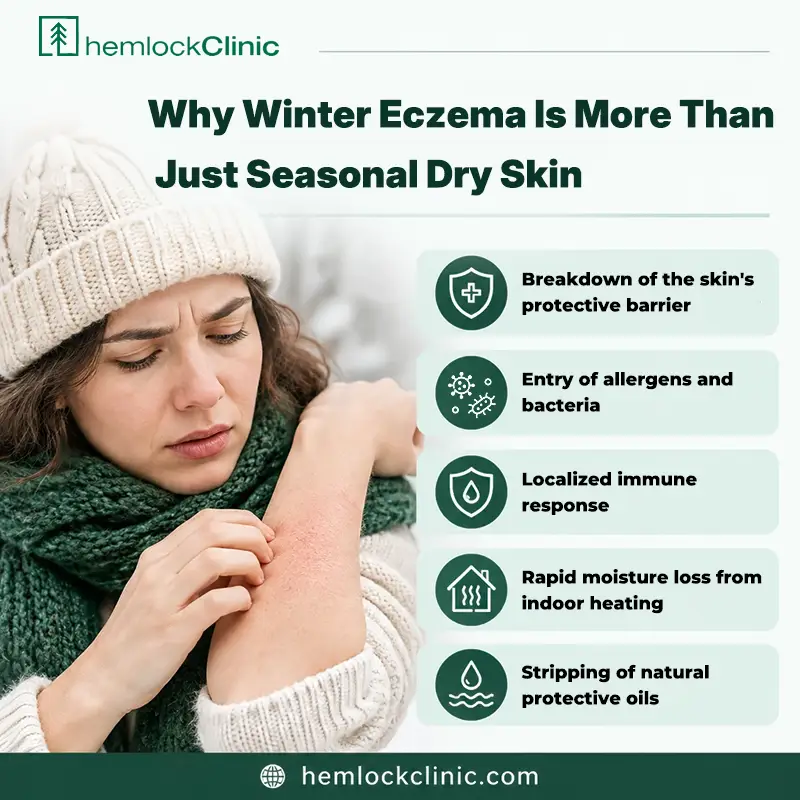
Think of your skin’s outer layer like a brick wall. The skin cells act as the bricks, while natural oils and lipids serve as the essential mortar holding everything tightly together. When genetic factors meet freezing outdoor temperatures, that protective mortar physically crumbles.
Once that barrier breaks down, outdoor allergens and everyday bacteria easily slip into the deeper layers of your skin. This breach triggers a significant, localized immune response that basic store-bought lotions simply cannot reverse.
How Indoor Heating Steals Your Skin’s Moisture
Moving quickly from freezing outdoor air into aggressively heated indoor spaces creates a harsh temperature shock for your skin. This rapid shift rapidly draws the moisture out of your skin, quickly stripping away your natural protective oils.
According to data from the National Eczema Association, stopping this rapid moisture evaporation is essential to keeping sudden flares under control. Adjusting your indoor environment is a vital piece of proactive healthcare, which is why we always emphasize a strong focus on prevention before your skin barrier completely collapses.
When Pharmacy Creams Stop Working: Recognizing a Broken Barrier
There is a big clinical difference between mild winter dryness and a severe immune flare-up. Minor dryness usually responds well to a standard home routine. But when your skin barrier is deeply compromised, putting regular store lotion onto open micro-cracks can cause a severe, painful burning sensation.
Signs Your Eczema Needs Medical Attention
You need to watch out for specific red flags that show your skin barrier has structurally failed. Seek a professional medical evaluation right away if you notice:
- Weeping sores or yellow crusting on the skin surface.
- Intense, painful inflammation that constantly keeps you awake at night.
- Deep, bleeding cracks on your hands, knuckles, or major joint folds.
Ignoring these severe symptoms often leads to secondary bacterial infections that require prompt medical treatment. Securing a real winter eczema treatment is essential to clear any infection and safely calm the immune system down.
The Hemlock Clinic Protocol for Severe Flares
Over-the-counter creams lack the active medicine required to stop an ongoing immune cycle. Dr. Manpreet Sran uses advanced prescription therapies to quickly shut down the inflammation and repair the skin’s physical structure.
Take a 34-year-old patient who recently came to Hemlock Clinic with painfully swollen, weeping hands after months of using generic “eczema relief” ointments from the pharmacy. Upon examining his skin, we found a secondary bacterial infection taking advantage of his broken barrier. By prescribing a short course of oral antibiotics along with a targeted topical medicine, the deep cracks closed up within 72 hours. He now keeps his skin clear using a gentle, non-steroidal option as part of a personalized care plan.
Understanding Your Treatment Options
To help you understand the difference between drugstore relief and real clinical intervention, here is how different therapies actually work on your skin:
| Treatment Type | How It Works on the Body | When It Is Actually Used |
| Store-Bought Moisturizers | Creates a temporary physical shield to trap surface moisture. | Best for maintaining intact, mildly dry skin. Fails during active flares. |
| Prescription Steroid Creams | Actively suppresses the local immune response and reduces severe swelling. | Short-term rescue therapy used to rapidly close deep, painful cracks. |
| Non-Steroidal Prescription Creams | Calms the local immune reaction safely, without the risk of thinning your skin. | Long-term, safe maintenance to prevent future winter flares from starting. |
Our Diagnostic Prescribing Approach
Our treatment approach is tailored specifically to what your skin needs right now. Initially, we may use carefully monitored, high-potency prescription anti-inflammatory creams to provide fast relief from severe swelling.
Once the acute flare is safely under control, we transition you to non-steroidal prescription treatments. This lets your skin maintain its health safely over the long term without the thinning risks associated with prolonged steroid use.
Looking Deeper: Internal Triggers and Allergens
Treating chronic eczema successfully means looking beneath the surface. We actively investigate hidden internal triggers or systemic sensitivities that might be fueling your winter flare-ups.
Combining these targeted dermatology treatments with your broader health needs yields the best possible results. This complete, whole-body approach is a cornerstone of our primary care services, ensuring we care for you as a whole person rather than just treating an isolated skin patch.
Take Control of Your Skin This Winter
The Pacific Northwest winter climate is tough, but your skin shouldn’t have to suffer through the season. You don’t have to accept cracked, bleeding skin as an inevitable part of cold weather.
Stop wasting money on ineffective drugstore lotions and get a real medical treatment plan. We provide welcoming, expert care and are currently accepting new patients ready to take control of their skin health in Redmond, WA.
Frequently Asked Questions About Winter Flare-Ups
Why does my regular lotion suddenly burn when I put it on during a flare?
When your skin barrier breaks down, tiny cracks expose the nerve endings underneath. Many store-bought lotions contain alcohols, fragrances, or water-heavy bases that sting on contact. That painful burning is a clear sign that your skin needs medical repair, not just basic moisture.
Can stress make my winter eczema worse?
Yes. While cold air and heating dry out your skin physically, mental or physical stress spikes your cortisol levels. High cortisol drives full-body inflammation, which directly fuels autoimmune conditions like eczema. Managing a flare often requires looking at both your environment and your stress levels.
Can changing my diet help heal my skin barrier?
While food alone won’t cure severe eczema, eating highly inflammatory foods can feed an active immune reaction. Identifying and avoiding your personal food triggers (like dairy or gluten if you are sensitive) can lower your body’s overall inflammation, making your medical treatments work much faster and more effectively.
Looking for Personalized Primary Care?
Schedule a visit with Hemlock Clinic in Redmond to discuss your health concerns and the next appropriate step in your care.
Schedule Your VisitDr. Manpreet Sran, MD
Board Certified Internal Medicine PhysicianMedically reviewed on November 16, 2026.
View Provider Profile →
